Tartare-Style Burger, Done the Hard Way (So It Stays Simple)
This started as a small experiment and quietly turned into one of the best burgers I’ve made at home. Not because it’s fancy, or original, or optimized for social media. Quite the opposite. It’s a deliberately minimal burger built around constraints: limited ingredient availability, sensitivity to freshness, and a strong preference for food that feels light rather than heavy. Over time, a few decisions proved themselves enough times to become intentional choices.
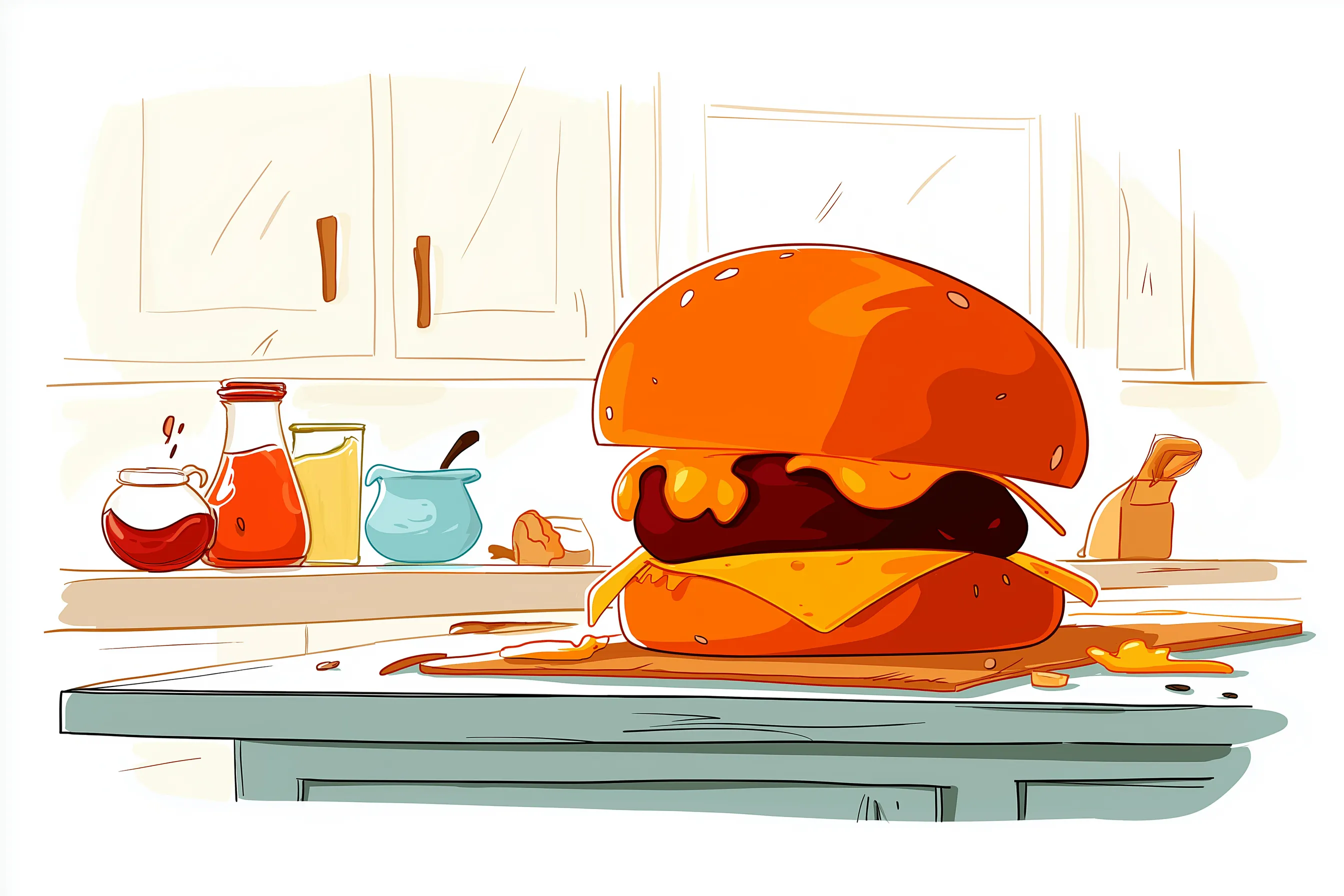
Why Tartare Meat
I live in a fairly remote place. Getting truly fresh, high-quality minced beef is unreliable at best. I’m also very sensitive to food that isn’t fresh — especially meat — so “it’s probably fine” isn’t a risk I enjoy taking.
Supermarket beef tartare solves that problem surprisingly well. It’s intended to be eaten raw, which means it’s handled, processed, and packaged with that expectation in mind. Even when bought at a regular supermarket, tartare-grade beef is consistent, clean, and predictable. I can rely on it. That matters, especially when the burger is intentionally cooked only on one side.
As a bonus, its fine texture and lean cut make it ideal for a light sear. It holds together without fillers and stays tender without becoming mushy.
One-Side Sear, On Purpose
The patty is browned from one side only. No flipping, no chasing crust symmetry.
Part of this is about texture — crisp on one side, soft and juicy on the other — but part of it is digestion. Heavy browning, especially when combined with a lot of fat, tends to feel… heavier. Overdone crust is often praised as flavor, but for me it crosses into diminishing returns quickly. Medium heat, controlled browning, and restraint produce a burger that tastes meaty, not aggressive.
Onions: Experiments and Conclusions
I tried placing very thinly sliced onions under the meat, smash-burger style. The onions were good. Soft, sweet, nicely cooked. The meat, however, lost its crust. That trade-off wasn’t worth it.
A much better result came from caramelizing the onions separately and adding them only during assembly. You get sweetness and depth without sacrificing the integrity of the patty. It’s an extra step, yes — but one that earns its place.
Raw onions, even sliced paper-thin on a mandoline, work too. But caramelized onions are a clear upgrade.
Cheese, Steam, and a Small Trick
Cheese goes on top of the meat while it’s still in the pan. Nothing else. Right before the meat is done, I add a tiny splash of water to the hot fat and close the pan with a lid. The resulting steam melts the cheese quickly and evenly, without further browning the meat or burning the patty underneath. It’s a small diner trick, but it works beautifully here.
The onions are added later, during assembly, together with thinly sliced pickled cucumbers. Other pickled options work just as well. This keeps the structure clean and familiar — classic burger composition, just executed with a lighter hand.
Pork Fat, Duck Fat, and Why It Matters
I usually cook this in pork fat. It adds depth without overpowering the beef. If you have it, duck fat works just as well — maybe even better. Slightly richer, slightly rounder. Neutral oils work, but they feel like a missed opportunity. Since the ingredient list is short, every element has to earn its place.
The Toaster, Not the Pan
This is the part where I knowingly disagree with popular burger advice.
I toast the buns dry, in a toaster.
Most buns available to me are light and airy. Toasting them in fat turns them into sponges almost instantly. They soak up grease, collapse before browning, and lose structure long before they gain flavor.
The toaster does something different: it creates a dry, crisp surface that acts as a protective layer. After toasting, I spread a small amount of butter on the hot sides. You still get aroma and richness, but without destroying the bun’s integrity.
When assembled, the bun holds up. It doesn’t dissolve under juices. That matters more than theoretical flavor gains.
Assembly Philosophy
Mustard, ketchup, pickles. Nothing clever.
These aren’t there to dominate. They’re there for acidity, sweetness, and contrast. A thin tomato slice works well too, especially if lightly salted beforehand, but I don’t always have one on hand.
The goal isn’t to build the burger. It’s to build this one — light, meaty, slightly spicy, and clean enough that you don’t feel weighed down afterward.
Final Thoughts
This burger isn’t about shortcuts, but it’s also not about complexity. It’s about making a few deliberate choices and sticking to them, even when conventional wisdom suggests otherwise.
Like good software, it benefits from constraint. Remove what doesn’t earn its place. Respect the materials. Don’t overengineer the solution.
Sometimes that’s enough.
- The Case for Owning Your Website Apr 06, 2026
- Tartare-Style Burger, Done the Hard Way (So It Stays Simple) Feb 15, 2026
- Why I Built a Utility-First CSS Framework — and Eventually Moved On Dec 19, 2025
- Blank Bookmarks Slate Sep 24, 2024
- Vercel Open Graph Card With No Framework Mar 13, 2024